



Written by Alexandra Dallago and Nadja Rosenberg, students from the University of Zurich.
Before the 19th century, the Alps were seen as a place of fear and mystery, but their image has shifted since they were mapped and explored (Fleming, 2004). Fleming (2004) describes this as a change "from a realm of terror and superstition to one of beauty, relaxation and contemplation" (Fleming, 2004, p. 51). This blog post focuses on how representation of the Swiss Alps evolved in art.
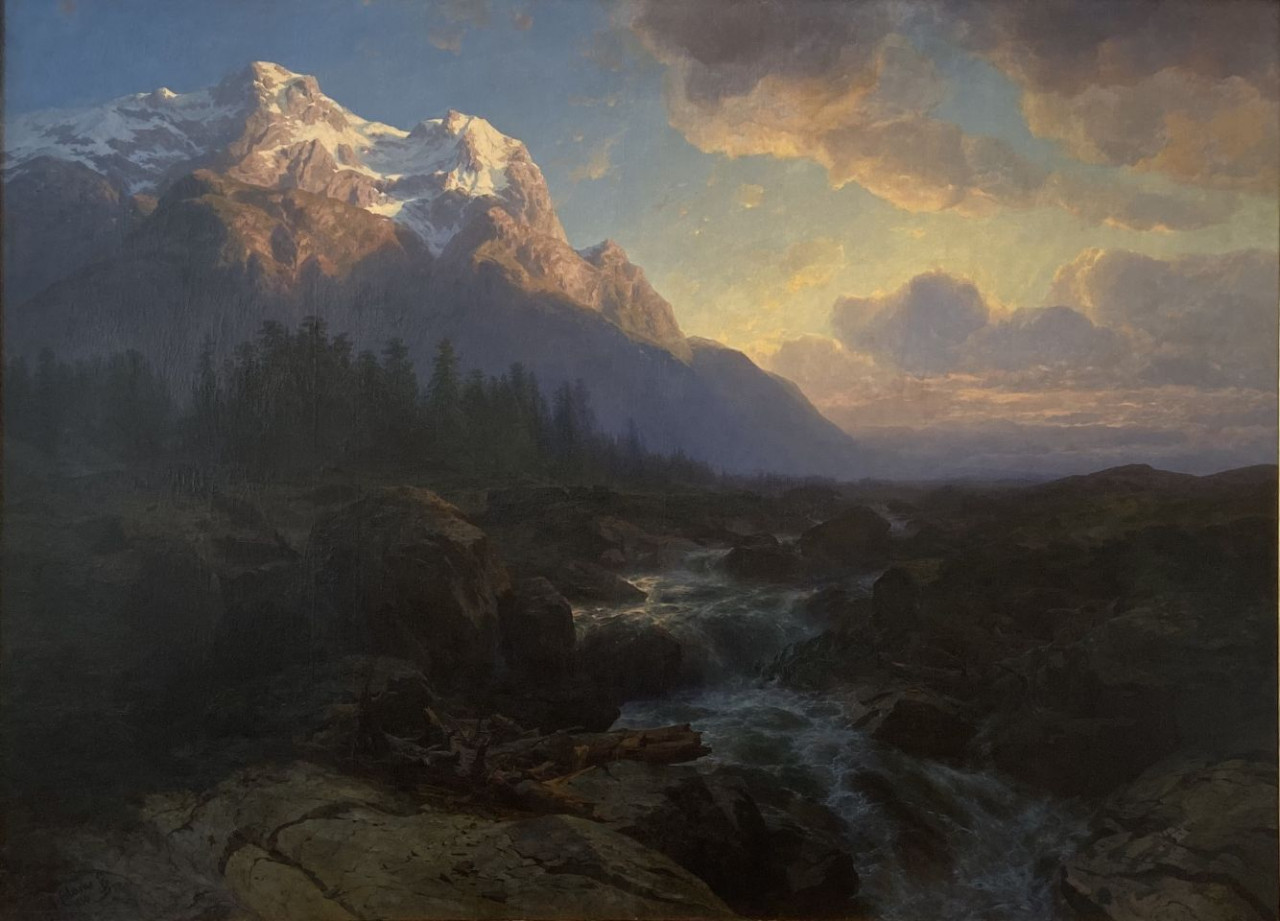
For many centuries, the Alps were seen as the unknown wilderness in the center of Europe. As Fleming (2004) explains, people were very afraid of the mountains because they believed that monsters and myths lived there. The Alps were viewed as a frightening barrier that no one really wanted to visit. Because there was little scientific knowledge and the mountains had not yet been explored or mapped, people imagined them as something unknown, and travellers often described them with fear (Fleming, 2004, p. 51).
This view slowly changed in the late 18th century. Raymond (1993) shows that people began to think differently about nature in general. They began to appreciate nature for the feelings it gave them, not just for its usefulness or beauty. Influenced by Rousseau's ideas and his call to „return to nature" people began to see untouched landscapes as a reflection of the human soul, making wild mountain regions newly attractive (Raymond, 1993, p. 5). The Romantic movement further shaped this perception of the Alps. According to Crauwels (2024), Romantic artists and writers showed mountains as inspiring, impressive and emotionally powerful, encouraging people to explore the Alps and paving the way for alpine tourism (Crauwels, 2024).
Many artists of the 19th century promoted tourism through their artworks depicting the Swiss Alps. One example is Alexandre Calame, who, according to Basting (2023), is considered the founder of Swiss alpine landscape art. Calame portrayed the Alps as spectacular and romantic, for example in his painting "Storm at Handeck", which drew increased attention to the Swiss Alps. Soon after, many other artist began painting the Swiss Alps, which led to increased tourist attraction. (Basting, 2023) According to an article by Art Museum Basel, curated by Eva Reifert (Kunstmuseum Basel, n.d.), the human shaping of the Alps into a symbol of Switzerland and tourism leads to a change in perception. Humans still see the mountains as a way of leaving day to day life, which is presented in artworks of many painters. (Kunstmuseum Basel, n.d.)
In conclusion, the Alps were once feared but turned into an admired symbol for culture and tourism. Artists and writers had an immense impact on reshaping the mountains into places of emotion, beauty escape from everyday life. This started as the alpine regions were explored and no longer seemed as scary anymore. Painters such as Calame played an important role in increasing tourism and establishing the Alps as a symbol of Switzerland in the 19th century. Artists influence cultural views and the perception of landscapes, often arousing greater interest in them.
References:
Basting, B. (2023, March 9). Calame's awe-inspiring Alpine views. Swiss National Museum - Swiss History. https://blog.nationalmuseum.ch/en/2023/03/calames-awe-inspiring-alpine-views/
Calame, Alexandre. (1856). The Rosenlaui Valley with the Wetterhorn. https://commons.wikimedia.org/wiki/File:Alexandre_Calame_Rosenlaui.jpg
Crauwels, T. (2024, October 18). The Alps in Literature: The age of Romanticism: Mountains in the Golden Age of Romanticism. The Fine Alpine Post by Thomas Crauwels. https://www.thomascrauwels.ch/en/blog/alpes-litterature-romantisme/
Fleming, F. (2004). The Alps and the Imagination. Ambio, 51–55. http://www.jstor.org/stable/25094588
Kunstmuseum Basel. (n.d.). Swiss Mountains. https://kunstmuseumbasel.ch/en/collection/foci-of-the-collection/swiss-mountains
Raymond, P. (1993). Von der Landschaft im Kopf zur Landschaft aus Sprache: Die Romantisierung der Alpen in den Reiseschilderungen und die Literarisierung des Gebirges in der Erzählprosa der Goethezeit. Berlin, New York: Max Niemeyer Verlag. https://doi.org/10.1515/9783110923827
About the author

Comments
By accepting you will be accessing a service provided by a third-party external to https://www.mountainapp.net/

This website uses no external trackers, no analytics, just session cookies and values your online privacy.

