



Written by Aischa Heyd and Verena Wesenauer, students from the University of Zurich.
«The continued expansion of mass tourism is having serious negative effects in several mountain regions of the world»
Barker, 1982, pp. 395
Ski tourism in Switzerland faces threats from climate change, as shorter winters and less predictable snow challenge local economies and traditional mountain lifestyles. Barker's quote remains especially relevant today, as global warming decreases snow reliability, making the future of Swiss ski tourism uncertain.
Many Swiss ski resorts are built at high elevations and rely on consistent snow. However, climate change brings warmer winters, rain, and shorter ski seasons. This forces resorts to depend on artificial snowmaking. This "snow dependency" ties communities to energy costs and extreme weather. Unpredictable snow forces some areas to diversify with glacier skiing or hiking, or other year-round activities. But, as Barker notes, relying too heavily on tourism means whole communities become more vulnerable to changes outside their control (Barker, 1982, pp. 399-401). Since the 1970s, Switzerland's snow-covered days have decreased a lot, especially below 1,500 meters (MeteoSwiss, n.d.). Lower resorts are declining, while higher areas benefit. For example, the Super St-Bernard ski resort in Valais closed in 2008 but has since focused on ski touring, freeriding, and summer hiking. Thus, the municipality has transitioned from mass tourism towards sustainable alternatives. (Robbins, 2025).
Rastandeh mentions that planning for climate change means creating alternative futures for the landscapes. These aim to balance tourism with other activities (2015, p. 83). Therefore, the recommended approach is no longer to view the mountains purely as a backdrop for winter sports, but rather to favour alternative uses. The goal is to promote year-round tourism, including hiking, mountain biking, and cultural offerings. In addition, focusing on traditional agriculture could strengthen regional identities and generate sustainable income. Programs such as "Swisstainable" already exist to promote this shift towards authenticity and environmental awareness. (Weber et al. 2022, pp. 43-44.) In some Swiss mountain resorts, it is already clear that adaptation is possible. Davos, for example, is focusing on events and conferences in sports and tourism. Andermatt, on the other hand, already has energy-efficient facilities and thus supports sustainability. National programs such as the "Sustainable Development Strategy 2030" and collaborations with WSL or SLF Davos also aim to promote innovation, and resource-saving infrastructures and monitoring systems for natural hazards are being expanded. (Matasci, 2012, pp. 126-127; Dahinden et al., 2021, pp. 10-12)
In summary, it is important to continue to take Barker's warning about the risks of mass tourism seriously. However, climate change requires a rethink, which opens opportunities for sustainable and resilient mountain regions. Consequently, the future of tourism in Switzerland no longer lies solely in the ski season, but in the diverse uses of mountain regions. Ultimately, local communities, politicians, and researchers must work together to ensure that the Alpine region remains liveable even with future warming.
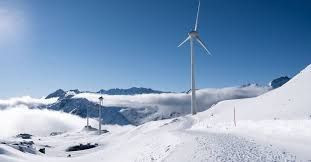
Andermatt Swiss Alps AG. (n.d.). Sustainability. Andermatt Swiss Alps. https://corporate.andermatt-swissalps.ch/en/sustainability
Barker, M. L. (1982). Traditional Landscape and Mass Tourism in the Alps. Geographical Review, 72(4), 395. https://doi.org/10.2307/214593
Dahinden, M., Vienni Baptista, B. & Paschke, M. (2021). Going transdisciplinary. How to implement impactful transdisciplinary research and education programs in plant sciences: Evaluation Report. ETH Zurich – Plant Science Center, Zürich, pp. 10–12. https://www.research-collection.ethz.ch/handle/20.500.11850/526113
Matasci, C. (2012). Swiss tourism in the age of climate change: vulnerability, adaptive capacity, and barriers to adaptation (No. 5506) [Doctoral Thesis, École Polytechnique Fédérale de Lausanne]. https://infoscience.epfl.ch/entities/publication/675dc178-585a-4658-8313-2cdab5374e7b
MeteoSwiss. (n.d.). Less snow and cold. https://www.meteoswiss.admin.ch/climate/climate-change/less-snow-and-cold.html
Rastandeh, A. (2015). Challenges and potentials in using alternative landscape futures during climate change: A literature review and survey study. Urbani Izziv, 26(2), 83–102. https://doi.org/10.5379/urbani-izziv-en-2015-26-02-001
Robbins, T. (2025). Super Saint-Bernard: Das Skigebiet, das nicht sterben will. SWI swissinfo.ch. https://www.swissinfo.ch/ger/bergleben/super-saint-bernard-das-skigebiet-das-nicht-sterben-will/89025274?utm_source=copilot.com.
Weber, F., Stettler, J., Müller, H., Elia, L., Wille, S. (2022). Swisstainable. Das Nachhaltigkeitsprogramm des Schweizer Tourismus. In: Krisenbewältigung und digitale Innovationen im alpinen Tourismus (pp. 1-166). St. Galler Schriften für Tourismus und Verkehr, vol 13. Erich Schmidt Verlag GmbH & Co. KG, Berlin. https://doi.org/10.37307/b.978-3-503-20916-3.04
About the author

Comments
By accepting you will be accessing a service provided by a third-party external to https://www.mountainapp.net/

This website uses no external trackers, no analytics, just session cookies and values your online privacy.
